

Overview
Chicago weather is notoriously unpredictable. From sudden spring downpours to rapid winter snowmelts, our basements are constantly under threat from rising water tables. At First Chicago Plumbing, we’ve seen firsthand how a small mechanical failure can lead to thousands of dollars in water damage. The best defense is a proactive one: testing your system and scheduling professional sump pump service before the clouds turn gray.
Why Testing Your Sump Pump Matters in Chicago
In Chicago, basement flooding isn’t just a possibility; for many homeowners, it’s an annual battle. Heavy rain and rapid snowmelt can overwhelm the soil around your foundation, forcing water into your basement.
Unfortunately, sump pump failure is a “silent” problem-most homeowners only realize there is an issue when they step into a puddle of cold water. This is particularly risky for those with older Chicago bungalows or finished basements where high-value electronics, furniture, and flooring are at stake. Regular maintenance and timely sump pump service are the only ways to ensure your home stays dry.
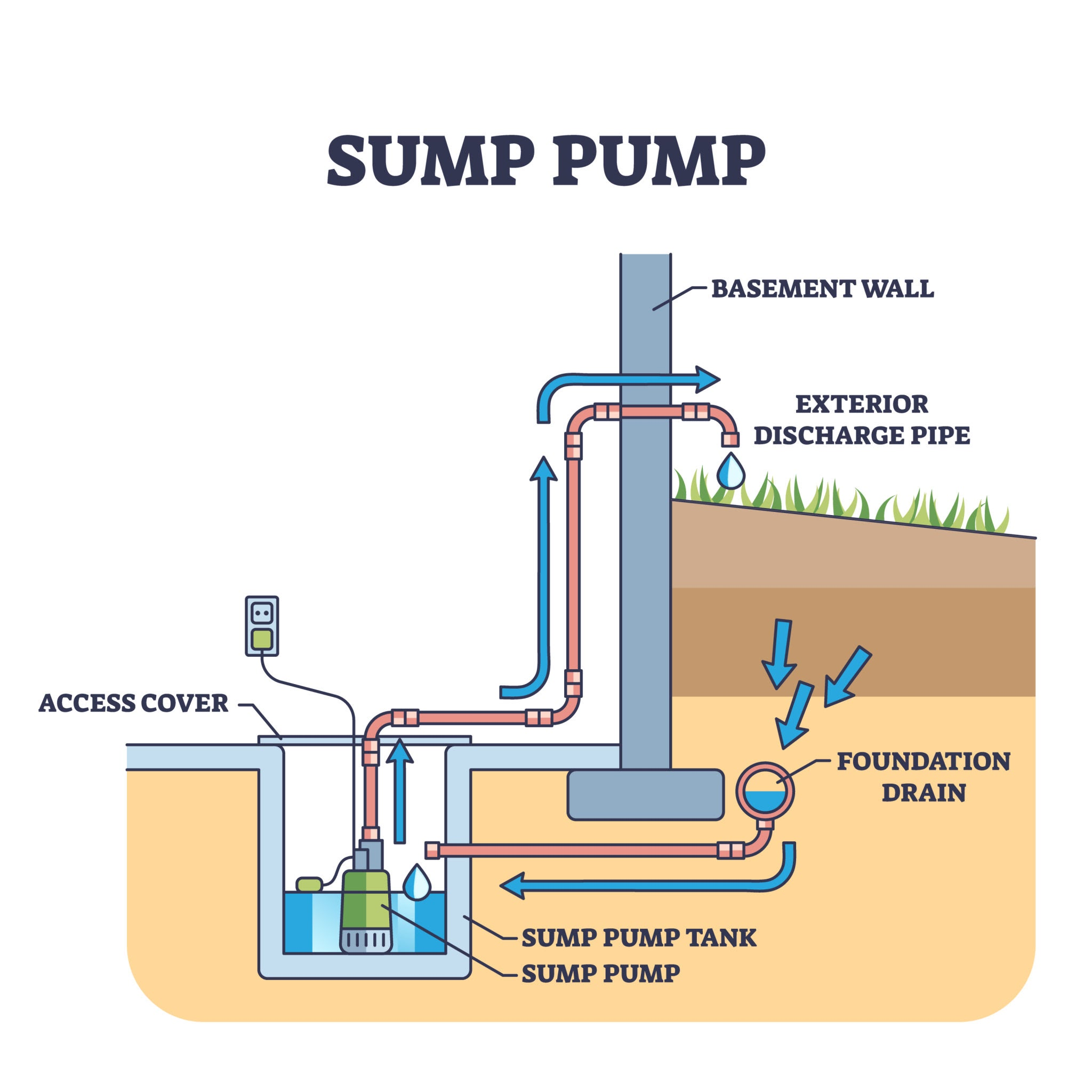
Sump pump system for home basement drain water discharge outline diagram
Chicago’s soil conditions make this problem even worse. Much of the Chicago area sits on dense glacial clay, and clay drains far more slowly than sandy soil. Instead of soaking straight down and dissipating quickly, water tends to linger and move around the foundation, increasing hydrostatic pressure against basement walls and into drain tile systems. That is one reason Chicago basements can take on water even during moderate rain events that might not create the same stress in a city with more permeable soil.
How Often Should You Test Your Sump Pump?
You should test your system at least once or twice a year. At a minimum, perform a check:
- Early Spring: Before the heavy April showers begin.
- Early Winter: To ensure the system can handle snowmelt.
- Before Summer Storms: When Chicago experiences intense, short-duration cloudbursts.
If your pump is over five years old or if you have a history of basement moisture, quarterly testing or a professional sump pump service visit is highly recommended.
What You Need Before Testing
Before you head down to the basement, gather these basic tools:
A 5-gallon bucket or garden hose
You need enough water to simulate a rising water level in the pit.
Flashlight
Sump pits are often tucked away in dark corners or utility closets.
Gloves
Pits can collect sediment, debris, and grime.
Clear access to the sump pit
Move any boxes or storage items away from the area so you have room to work safely.
Step-by-Step: How to Test Your Sump Pump
Step 1: Check the sump pit for debris
Remove the lid and look inside. Ensure there are no rocks or debris that could clog the intake-debris is a leading cause for needing emergency sump pump service.
Step 2: Inspect the power cord and outlet
Ensure the pump is plugged into a grounded (GFCI) outlet. Look for signs of wear or fraying on the cord.
Step 3: Look at the float switch
The float switch is the “brain” of the pump. Ensure it isn’t pinned against the side of the basin; it must be able to move up and down freely.
Step 4: Check the check valve
Locate the check valve on the discharge pipe above the pump. This valve keeps pumped water from flowing back into the pit after the motor shuts off. Make sure it is not cracked, jammed, or installed backward, and confirm the directional arrow points away from the pump. A bad or missing check valve can cause short cycling and make the pump work harder than it should.
Step 5: Pour water into the sump pit
Slowly pour your 5-gallon bucket of water (or run the hose) into the pit.
Step 6: Watch the pump turn on, drain, and shut off
As the water level rises, the float should lift, triggering the motor. The water level should drop rapidly. Once the water is gone, the pump should shut off immediately.
Step 7: Check the discharge line outside
Go outside and ensure water is actually exiting the pipe and flowing away from your foundation. If the pipe is buried or blocked, the water will just cycle back into your basement.
What Should Happen During a Proper Sump Pump Test?
- Automatic Activation: The pump should kick in without you having to jiggle the switch.
- Fast Drainage: The water should disappear in seconds, not minutes.
- Clean Shutdown: The pump should stop once the pit is empty.
- Smooth Operation: You should hear a steady hum-no grinding, rattling, or burning smells.
Warning Signs Your Sump Pump May Not Be Working
- Failure to Start: Even with a full pit, the motor stays silent.
- Ineffective Pumping: The motor runs, but the water level doesn’t move (likely an airlock or broken impeller).
- Constant Running: The pump never shuts off, which will eventually burn out the motor.
- Short Cycling: The pump turns on and off every few seconds.
- Check Valve Problems: If water drains out and then quickly falls back into the pit, a failed, clogged, or missing check valve may be forcing the pump to repeat the same cycle over and over.
- Loud Noises: Grinding or vibrating sounds usually indicate a failing bearing or damaged fan.
- Line Issues: The discharge pipe is frozen, clogged with leaves, or leaking back into the house.
Common Mistakes Homeowners Make When Testing a Sump Pump
- Testing only the motor: Many homeowners lift the float manually to hear the motor run. This doesn’t prove the pump can actually move water.
- Forgetting the discharge line: A working pump is useless if the exit pipe is blocked.
- Skipping the check valve: Even if the pump turns on normally, a damaged or backward check valve can send water right back into the pit and cause repeated cycling.
- Ignoring the backup battery: If the power goes out during a storm, your main pump is useless.
- Waiting too long: Don’t wait until the storm is already happening to find out you have a problem.
- Using extension cords: Sump pumps pull significant power; extension cords can overheat and cause fires.
Should You Test a Battery Backup Sump Pump Too?
Yes! In Chicago, heavy storms often knock out the power. If your primary pump fails, your backup system is your last line of defense. Check for backup alarms and battery age. If the battery is more than 3 years old, you should include a battery replacement in your next sump pump service appointment.
When to Call a Plumber After Testing Your Sump Pump
Contact First Chicago Plumbing if you notice the pump does not activate, drains slowly, or makes strange noises. A ten-minute check today can save you ten thousand dollars in repairs tomorrow.
With over 20 years of experience navigating Chicago’s unique drainage challenges, we offer comprehensive inspections and high-quality sump pump service. A small proactive step today is the best way to keep your basement dry and your home protected.
Need a professional sump pump inspection? Call First Chicago Plumbing today at 773-661-7969!
Frequently Asked Questions: Testing Your Sump Pump
How do I test my sump pump at home? The “Bucket Test” is best. Pour 5 gallons of water into the pit and ensure the float triggers the pump and removes the water quickly.
How often should Chicago homeowners test a sump pump? At least twice a year. If you live in a flood-prone area, consider a seasonal sump pump service check-up.
What does it mean if my sump pump runs but does not drain water? This is often caused by a check valve issue or an airlock. You should call for sump pump service immediately to prevent motor burnout.
How do I know if the sump pump check valve is bad?
If the pump runs but water flows back into the pit after each cycle, the check valve may be damaged, clogged, or installed the wrong way.
When should I replace my sump pump instead of repairing it? If the pump is over 10 years old or has failed more than once, replacement is usually safer than repair.