

Short answer: Looking for an emergency plumber in Chicago? First stop the damage: close the main water valve for a leak, or leave the building and call Peoples Gas or 911 if you smell gas. Then call First Chicago Plumbing. Emergency service is available, and our office is open seven days a week for burst pipes, sewer backups, failed pumps and leaking water heaters.
The first ten minutes of a plumbing emergency decide how much damage you end up with. These steps are safe for any homeowner or property manager to take before help arrives.
What to do right now in a plumbing emergency
- Smell gas? Get out first. Leave the building without switching anything on or off, lighting a flame or using your phone inside, then call Peoples Gas from a safe place (your own gas utility in the suburbs) or 911. Stay outside until the utility gives the all-clear.
- Stop the water. Close the main shutoff, usually in the basement where the water service comes through the front foundation wall. If you are not sure where it is, read how to find your main water shut-off valve.
- Keep clear of electricity. Do not walk into standing water near outlets, appliances or a panel. Peoples Gas advises not stepping into floodwater and calling the gas and electric utilities before you go into a flooded basement.
- Isolate a leaking water heater. Close the cold-water valve above the tank, and turn the gas control to off or switch off the breaker for an electric unit.
- Stop using drains during a backup. If sewage is coming up a floor drain, do not run washers, showers or toilets anywhere in the building.
- Document and call. Take photos for insurance, then call us and describe what you see so we arrive with the right equipment.
What counts as a plumbing emergency?
Burst or frozen pipes
Water spraying from a split line or nothing coming out on a frigid morning. See frozen pipe repair.
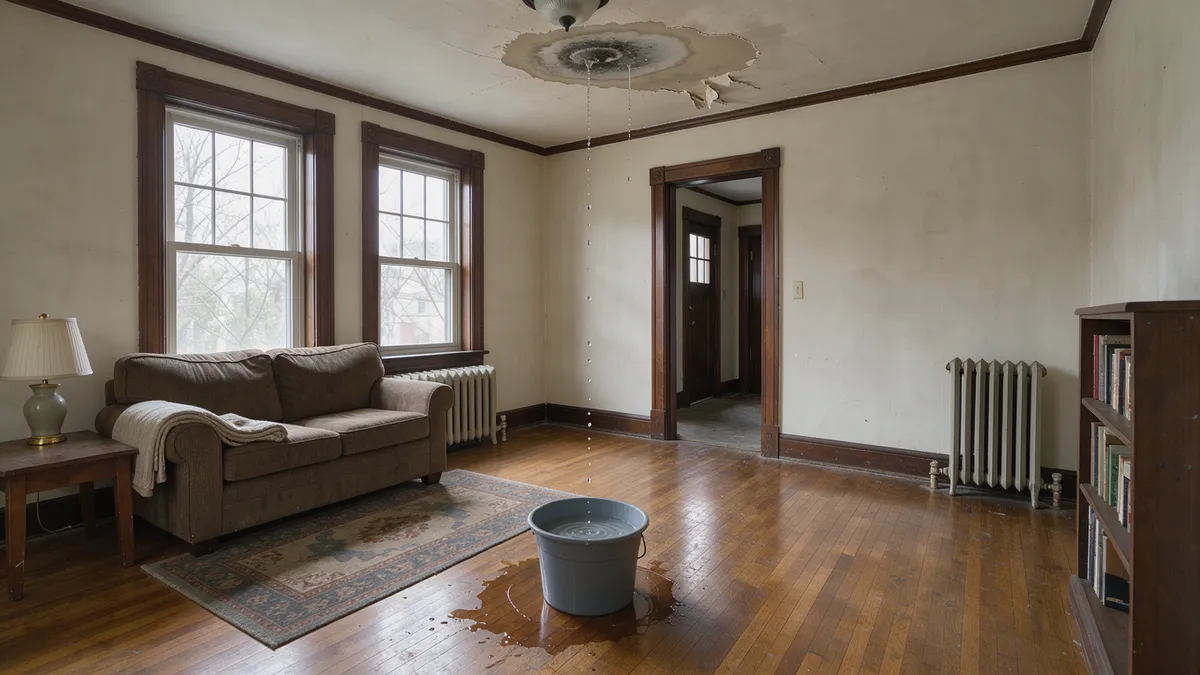
Water through a ceiling
A stain that is growing or dripping means an active leak above. See water leak detection and repair.
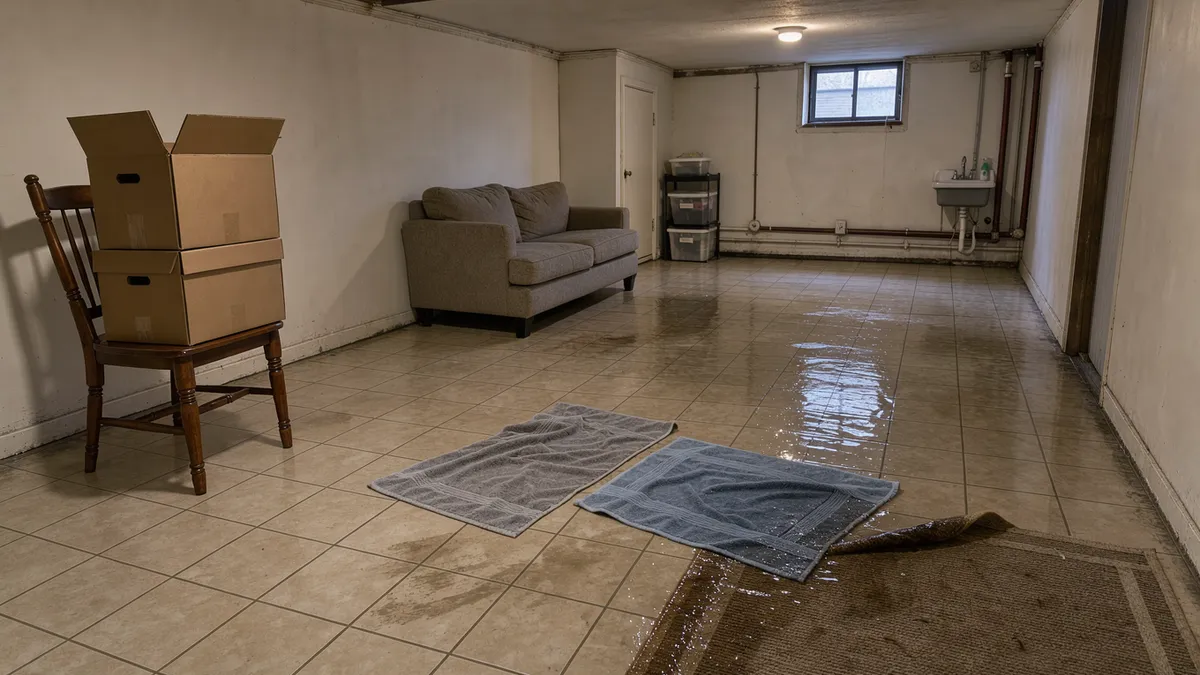
Sewage in the basement
Backups through floor drains are common in Chicago during heavy rain. See basement sewer backup.
Sump or ejector pump failure
A pump that stops during a storm can flood a basement fast. See sump pump replacement and ejector pump service.
Leaking water heater
Water pooling under the tank or a relief valve that will not stop. See water heater repair.
Gas odor near piping
Leave first and call the utility; then we repair the house piping. See gas leak repair.
Emergency now, or can it wait for a scheduled visit?
| Problem | Treat as an emergency? | What to do meanwhile |
|---|---|---|
| Main sewer line clogged, every drain backing up | Yes | Stop all water use; see sewer rodding |
| Burst pipe or water you cannot stop | Yes | Close the main valve |
| No hot water, no leak | Usually next available visit | Check the pilot or breaker |
| One clogged toilet, others work | Usually not | Use another bathroom; avoid repeated flushing |
| Slow drip under a sink | Usually not | Close the fixture shutoff and set out a pan |
What happens when you call our emergency plumber in Chicago
- We ask the key questions. Where the water or sewage is coming from, whether you could shut it off and whether gas or electricity is involved.
- We talk you through containment. If the water is still running, we help you find the right valve while you are on the phone.
- We diagnose on site. Our plumber finds the source, which is not always where the water shows up.
- You get the price first. We explain the options, from a temporary fix that stops the damage now to the full repair, with an upfront price for each.
- We stabilize, then repair. We make the system safe and usable, and schedule any larger follow-up work with you.
Chicago’s two emergency seasons: storms and deep freezes
Much of Chicago is served by combined sewers that carry both stormwater and sewage, so a heavy storm can push water back up through basement floor drains in older homes. Winter brings the other wave: pipes along brick exterior walls and outdoor faucets that freeze and split during a cold snap.
Both are easier to handle when you already know where your shutoffs are and that your pumps work. Our guide to sewer backups in Chicago basements explains the causes and the fixes.
Pro tip: Hang a tag on your main water valve and show everyone in the household where it is. In a two-flat, make sure both units know which valve controls the building.
Plumbing emergency right now?
Family-owned, licensed in Illinois and Chicago, upfront pricing with no hidden fees. Open 7 days a week.
Call a plumber right away if: water is reaching electrical fixtures, sewage is backing into living space, you cannot close the main valve, or a pipe has split. If you smell gas, leave and call Peoples Gas (see its emergency guidance) or 911 from outside before calling anyone else.
Why homeowners choose First Chicago Plumbing in an emergency
We are a family-owned plumbing company that has served Chicago and the North Suburbs for over two decades, licensed in Illinois and the City of Chicago. You get a plain explanation and an upfront price, with no hidden fees, before work begins.
Our office is open Monday to Friday 8 AM to 8 PM and Saturday and Sunday 8 AM to 6 PM, and emergency service is available. Many emergencies start as small problems, so the annual inspection in our First Class Plumbing Care Plan is a good way to catch a failing pump or tank early.
Areas we serve
Our emergency plumber Chicago coverage spans the city and the North Suburbs, including:
Frequently asked questions
Do you offer emergency plumbing in Chicago on weekends?
Yes. Our office is open Saturday and Sunday from 8 AM to 6 PM as well as Monday to Friday from 8 AM to 8 PM, and emergency service is available. Call and describe the problem; we will tell you honestly when we can get there and what to do in the meantime to limit damage.
How much does an emergency plumber cost in Chicago?
It depends on the problem, the time of the call and what it takes to fix: a frozen pipe that only needs thawing is very different from a collapsed sewer line. We give you an upfront price before starting, often with a choice between stopping the damage now and completing the full repair later.
What should I do while I wait for the plumber?
Shut off water at the main or fixture valve, keep away from water near electricity, stop using drains if sewage is backing up, and move valuables off the floor. Take photos for insurance. If gas is involved, stay outside until Peoples Gas or your gas utility says the building is safe.
Is a clogged toilet a plumbing emergency?
A single clogged toilet usually is not, if another bathroom works. It becomes urgent when the toilet keeps overflowing, when several drains back up at once, or when water rises in a basement floor drain. Those point to a main sewer line blockage that needs rodding before you use any water.
Who do I call first if I smell gas?
Leave the building, then call the gas utility from outside: Peoples Gas in the City of Chicago or your suburban gas company, or 911. The utility responds to the emergency and shuts off gas if needed. After that, call a licensed plumber like us to find and repair any leak on the house piping.